Password protected areas
Newsletter

Levee failure could happen in California, warns expert

The levee failures that led to the inundation of New Orleans are the greatest disaster to hit an American city - but a similar situation could happen in California with even larger consequences for the state, says a leading geotechnical expert.

"The Sacramento Delta is protected by nearly a thousand miles of levees just as vulnerable as the ones in New Orleans," said Raymond Seed, professor of civil and environmental engineering at UC Berkeley and one of the nation's leading geotechnical experts. "Actually, the Sacramento levees have a greater chance of failing than the New Orleans levees did, in terms of design; the New Orleans levees were designed to offer protection from a 200 year weather cycle, versus only 75 in Sacramento."

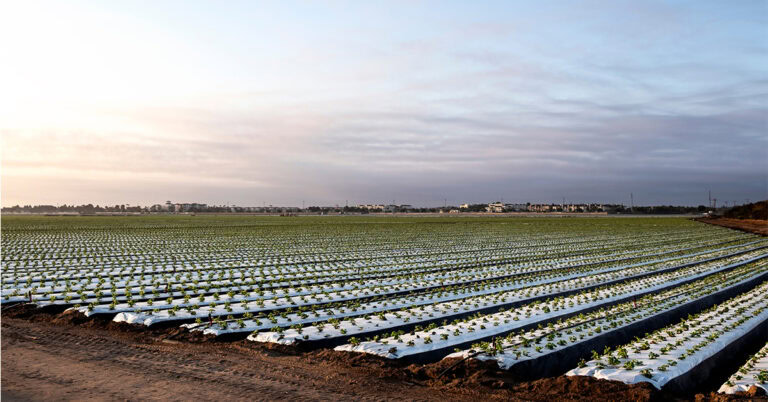
The delta, formed by the confluence of the San Joaquin and Sacramento River Valleys, offers some of the richest farmland in the nation and has been prized since the 1800s. However, decades of use and pumping water out of the saturated delta soil to enable farming have lowered the area as much as 20 feet below sea level, protected by a large system of levees built over the years to varying specifications.

"In general people don't want to deal with low-probability risks that involve long-term, expensive planning," said Seed. "There have been over 160 levee failures in California during the 20th century, and the risk increases annually."

"The time to invest in California's response capability is before there's a real disaster to contend with. It will cost, but that cost is minor compared to the alternative."
-Raymond Seed, Professor of Civil and Environmental Engineering, UC Berkeley

While Sacramento would be far easier to evacuate than New Orleans, California faces other challenges that Louisiana did not.

"For one thing, we have the risk of earthquakes," said Seed. "This levee system goes right up to a fault line; there's an estimated 0.5% chance a year that an earthquake will occur which would cause more damage than the state could readily repair. The kind of sand-based levees which are good against floods are actually worse in seismic disturbances. The sand just liquefies."

Another serious issue is the fact that over two thirds of California's water supply is channeled across the delta. Major levee failures could knock out this water delivery system for up to two years.

"It's the price you pay for accessing marginal real estate," said Seed. "There are solutions which California could pursue, and following the aftermath of Hurricane Katrina, I think there may be a better sense of urgency about it. We need good studies to figure out what to do. There have been previous studies, but there hasn't been serious follow through or investment as a result."

Seed suggests that, apart from studying how best to address the engineering problems of the levees, California could take some immediate steps to better prepare itself to respond to a Katrina-like disaster.

"At a minimum, in order to fix major levee failures, the state will need barges, plastic sheets, and supplies of large stones; at present it doesn't have nearly enough of any of these, and they can't be produced rapidly on demand. The time to invest in California's response capability is before there's a real disaster to contend with. It will cost, but that cost is minor compared to the alternative."


Volume 11, Issue 1, January 2006

The CCST Report focuses on CCST activities and highlights innovative science and technology research and applications in California.


INSIDE THIS ISSUE:

Related links: