About CCST
About CCST
The California Council on Science and Technology (CCST) is a non-partisan, nonprofit organization that exists to make California’s policies stronger with science and technology.
CCST was established in 1988 by a unanimous vote of the California Legislature to provide objective advice from California's scientists and research institutions. We respond to the Governor, the Legislature, and other state entities who request independent assessment of public policy issues affecting the State of California relating to science and technology.
Learn about our:
Our Vision
A resilient and prosperous California that thrives on partnerships between science, technology, and policy communities.
Our Partners
CCST is modeled after the National Academies of Sciences, Engineering, and Medicine - the official scholarly body serving the United States of America - to provide the State of California with a parallel network of institutional and individual advisors. Following this model, CCST operates in partnership with, as well as receives financial and mission support from, a network of public and private higher-education institutions and Federally funded research institutions:
Academic Partners



Federal Laboratory Partners



CCST operations are also made possible by the generous support of many philanthropic individuals and foundations through our annual giving and major gifts programs.
Who We Are
Get to know the teams and leadership who comprise CCST, including our Board of Directors, Staff, CCST Science & Technology Policy Fellows, and Distinguished Experts.
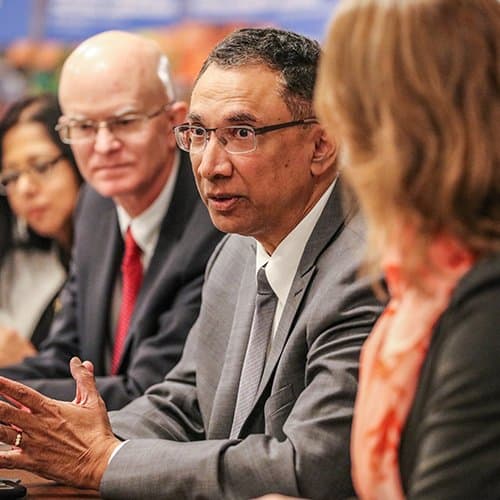
Board of Directors
Chaired by Andrew McIlroy, the CCST Board of Directors works to implement our mission and programming.
See More
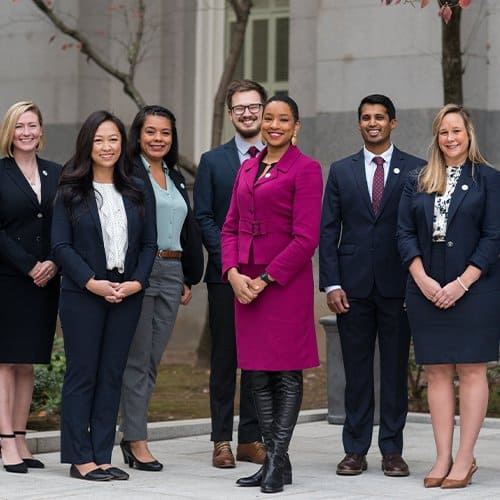
S&T Policy Fellows
The CCST S&T Policy Fellows program places science and technology PhDs in the California State Legislature and executive branch offices for a year-long fellowship.
See More
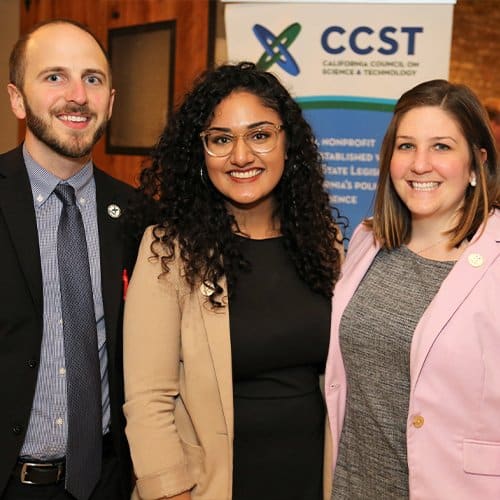

Distinguished Experts
CCST Distinguished Experts are a group of distinguished scientists, technical experts, Nobel Laureates, and entrepreneurs who serve as a resource to CCST.
See More
Core Values
CCST’s core values inform our mission and guide our work:
- Service
- Independence
- Partnership
- Integrity
They are anchored in the following foundational commitments:
- Diversity in subject matter expertise; institutions; gender; culture, race, and ethnicity; age; sexual orientation; career stage; and more.
- Increasing equitable access to resources, training, science, and policy opportunities.
- Creating a space that is inclusive of all people, professions, and beliefs.
Read CCST's Code of Conduct Policy.
The CCST Story
In 1988, a coalition of policymakers and institutional leaders were seeking ways to catalyze the role of science and technology in California’s future direction in research, industry, and policy. The effort resulted in Assembly Concurrent Resolution 162 - championed by then-Assemblymember Sam Farr and then-Senator John Garamendi - calling for the creation of CCST. ACR 162 was approved by unanimous vote in both the Assembly and the Senate.
California has seen great advances and new challenges since then, and CCST has been invited as a voice of counsel at each turn. Over the past 35 years, our approach to partnering and facilitating dialogue across institutions and disciplines has allowed us to create a collective impact that exceeds what any single institution could accomplish on its own.
CCST in Action
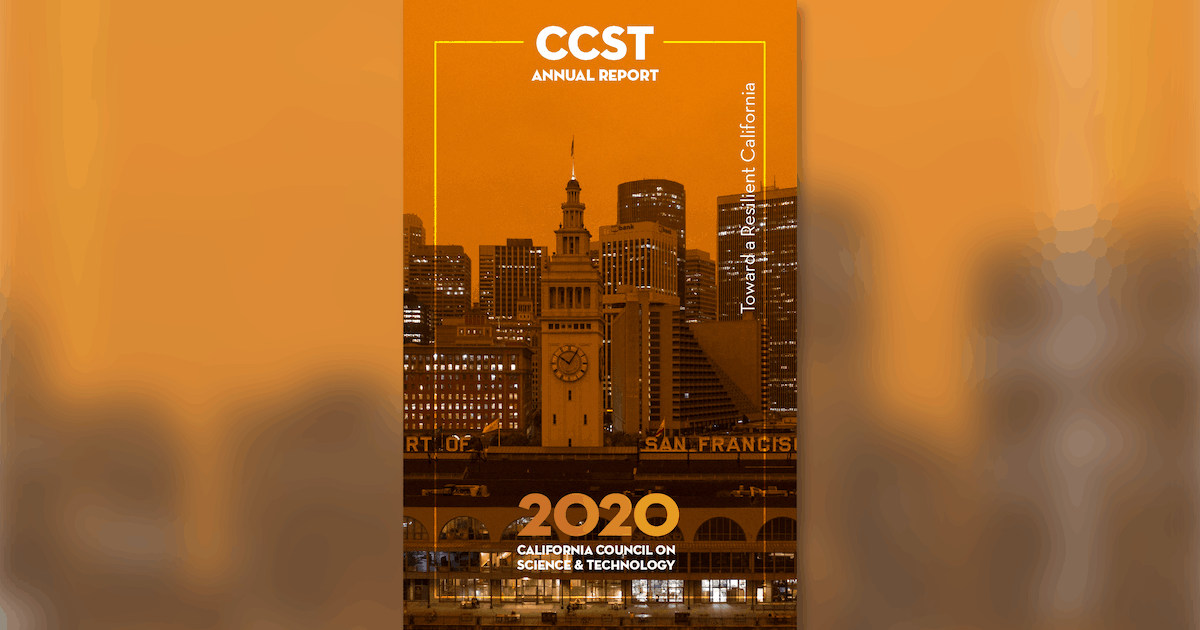
Disaster Resilience
Generously supported by the State of California, CCST’s Disaster Resilience Initiative delivers evidence-based recommendations for increasing resilience to intersecting disasters such as wildfires, droughts, pandemics, and other extreme events — advancing the State’s readiness and responses to ongoing and compounding threats.
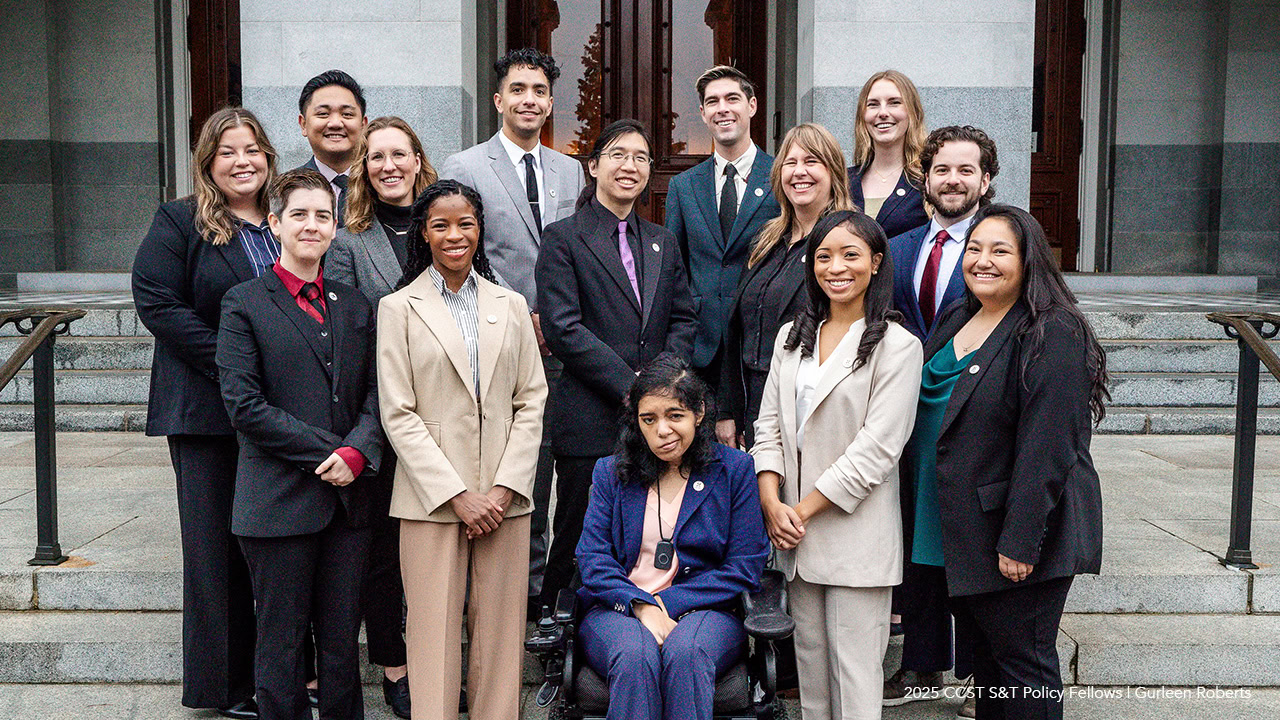
CCST S&T Policy Fellows
Policymakers increasingly require more rapid S&T advice. For the past decade, CCST has worked with government and philanthropic partners to prepare scientists and engineers for public service through our CCST Science & Technology Policy Fellows program, with placements in the California State Legislature and Executive Branch.
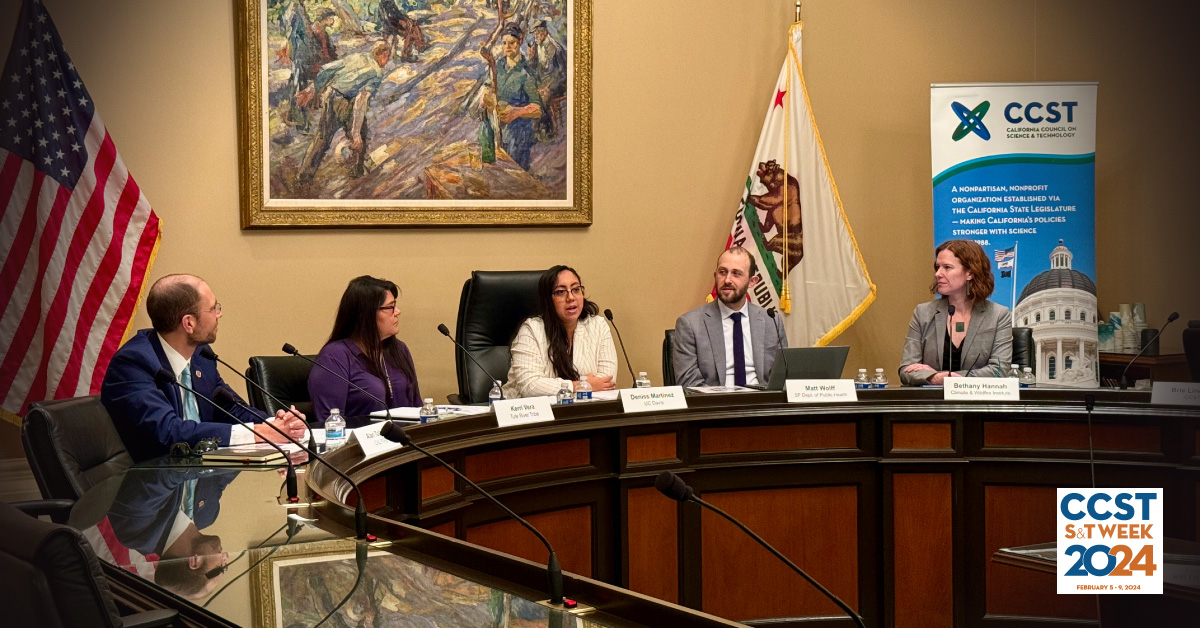
Expert Briefings
CCST Expert Briefings provide insights from panels of relevant experts on a range of science or technology topics. CCST also uses Expert Briefings to convey the results of its reports. Expert Briefings are convened to provide reliable, impartial expertise on topics when policymakers need information in a relatively short timeframe.
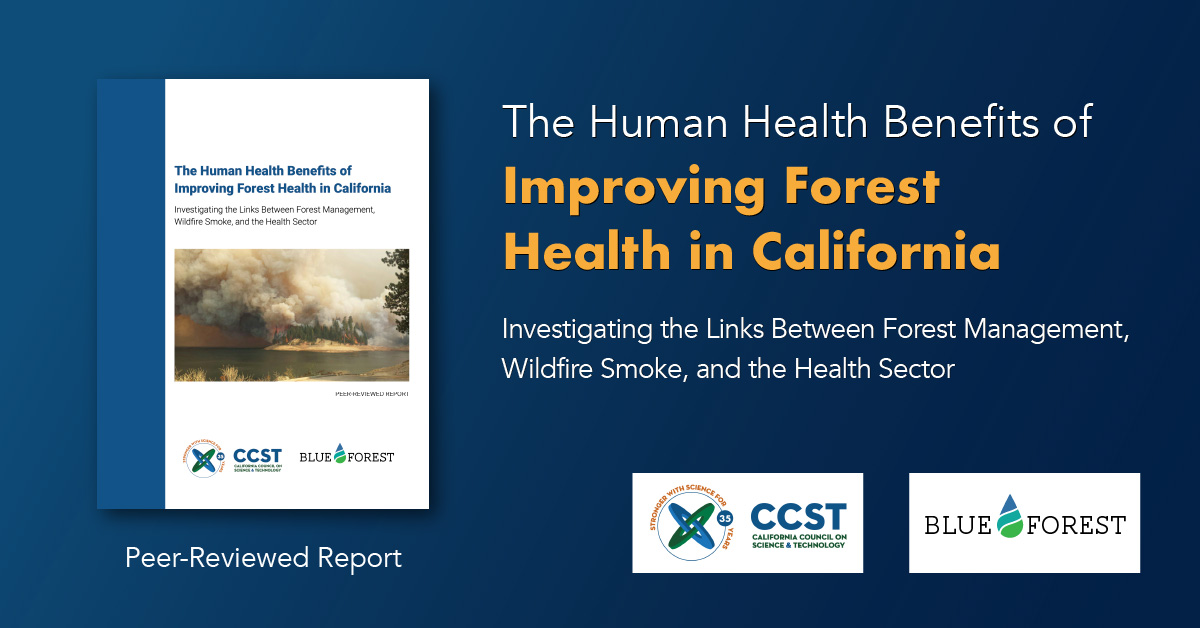
Publications
CCST convenes world-class experts to develop assessments on a range of critical topics that are thorough and objective, and based on scientifically sound principles. CCST's publications are produced in compliance with a rigorous study and peer review process prior to publication.
Our History
November 2023
CCST welcomes 15th anniversary class of CCST Science & Technology Policy Fellows to begin their training in Sacramento.
February 2023
CCST celebrates 35 years of making California's policies stronger with science and technology at an anniversary reception during CCST Science & Technology Week.
November 2019
Beginning with the 2020 class, CCST expands Fellowship from 10 to 15 Fellows and adds placements in State Agencies and Offices of the Governor.
May 2019
Longtime CCST champion Amber Mace, PhD, named as CCST's new Executive Director after nationwide search.
November 2018
CCST welcomes 10th class of CCST Science & Technology Policy Fellows.
September 2018
CCST celebrates 30th anniversary with a reception at Science to Action Day ahead of the Global Climate Action Summit.
January 2018
CCST completes report for the Public Utilities Commission on Underground Natural Gas Storage in California.
February 16, 2017
CCST Awards Grants to Nine States to Explore Potential for Science Policy Fellowships; funding for the grants provided by the Gordon and Betty Moore Foundation and the Simons Foundations beyond CA.
June 27, 2016
SB 826 (Budget Act of 2016) is signed by the Governor, directing the Public Utilities Commission, in consultation with the Energy Commission, Air Resources Board, and the Division of Oil, Gas, and Geothermal Resources within the Department of Conservation to request CCST to undertake a study on the long-term viability of natural gas storage facilities in California.
January 1, 2015
CCST delivers final report to the Natural Resources Agency on an Independent Scientific Assessment of Well Stimulation.
February 2014
CCST's first Science Fellow placed in the executive branch (Governor's Office of Emergency Services) as part of a pilot project in partnership with the American Society of Mechanical Engineers.
September 30, 2013
CCST celebrates 25th Anniversary with a Board and Council meeting at the California Science Center, featuring dinner under the wings of the Endeavor Space Shuttle Board and Council meeting agenda.
September 27, 2013
CCST's 25th Anniversary recognized through Assembly Concurrent Resolution 75 (Bonilla).
September 20, 2013
SB 4 (Pavley) is signed by the Governor, directing the Natural Resources Agency to conduct an independent scientific study on well stimulation treatments.
November 2, 2009
The first class of CCST Science & Technology Policy Fellows begins their training in Sacramento; funders include the Gordon and Betty Moore Foundation; Stephen Bechtel Fund/S.D. Bechtel Jr. Foundation; Kingfisher Foundation; The Heising-Simons Foundation; TOSA Foundation, and the Gen-Probe Fund.
October 2007
CCST partners with the National Academies to hold the first national convocation on state-level science and technology policy.
February 2005
CCST invites NASA and U.S. Department of Energy laboratories and centers to form the CCST Federal Laboratory Affiliates, marking the first time that CCST expanded its network of supporting institutions since its inception in 1988.
February 2, 2005
First meeting of the California Teacher Advisory Council (CalTAC), formed with gifts from S.D. Bechtel, Jr. Foundation and Stuart Foundation.
2004
The National Academies and CCST enter into a memorandum of understanding agreeing to cooperate to their mutual benefit.
2003
The CCST Science & Technology Policy Fellows program is proposed, originally conceptualized as the California Science and Technology Experts in Residence (CASTER).
November 1999
CCST releases the final component of the twelve-part California Report on the Environment for Science and Technology (CREST). It culminates a multi-year effort and the first comprehensive assessment of the state's science and technology indicators, and offers recommendations for how industry leaders, academic administrators, and state policymakers can plan more effectively for a high-tech economy in the future.
September 1997
The CCST Senior Fellows program, now known as Distinguished Experts, is launched with funding from the Hewlett Foundation, bestowing the title upon 54 California leaders in science and technology.
May 19, 1995
Susan Hackwood, Founding Dean of Engineering at UC Riverside, was appointed Executive Director of CCST by the University of California Board of Regents, appointment effective July 1st.
1989
The first meetings of the CCST Board and Council are held.
September 15, 1988
ACR 162 is filed in record with the Secretary of State, formally chartering CCST.
August 31, 1988
ACR 162 is read for a third time and presented by Senator Garamendi on August 31. Roll was called, and the resolution was adopted by the State Senate, 38-0.
August 26, 1988
The Assembly votes to adopt ACR 162.
June 30, 1988
Assembly Concurrent Resolution 162 (Assemblymembers Farr, Quackenbush, Eastin, and Duplissea; Senator Garamendi as coauthor) offered.