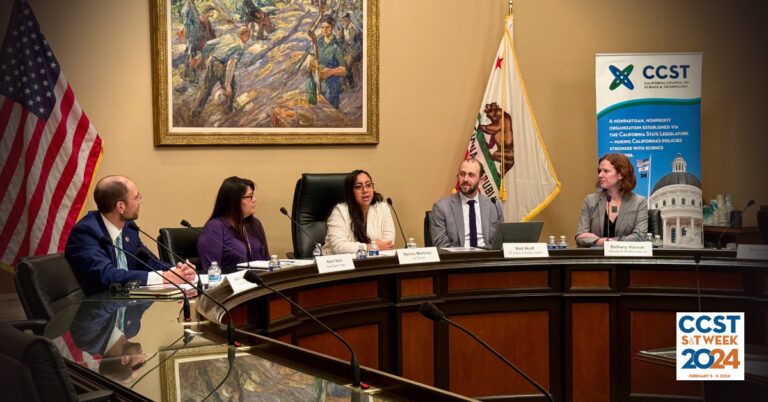
California State University East Bay President
Mohammad Quayoumi hosted the first in what
will be a series of meetings exploring aspects of
California's innovation 'ecosystem.'
The meeting on October 14, "A Call to Action:
Advancing California's Science, Technology,
Engineering and Mathematics (STEM) Innovation
Ecosystem," brought together industry and education
leaders to discuss reinventing K-12 education,
more effectively integrating technology into
the education process, and how regional hubs
of applied R&D can enable institutions of higher
education to work with regional companies and
entrepreneurs.
"When students start school with a solid foundation,
it translates into enhanced success throughout
the entire education pipeline, resulting in a
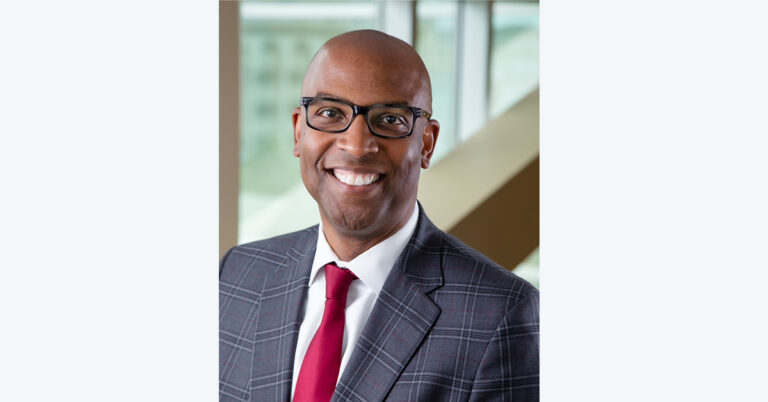
more college-ready workforce," said Ken McNeely,
president of AT&T California, who delivered the
keynote address. "California companies have a
vested interest in increasing their engagement
with organizations that can make the greatest
impact on our students and our future workforce,
especially in high-growth STEM fields."
In addition to the panel discussions, speakers
included Rey Ramsey, president and chief executive
officer of TechNet; Brian Steel, vice president
of corporate development at PG&E; and CCST
Board Member Warren Baker, president emeritus
of California Polytechnic State University, San Luis
Obispo.
"There are compelling reasons to address the
fundamental issues of what it will take to create,
attract and retain top innovative talent in CA,"
said Baker. "Hopefully, new notions will emerge from these discussions, such as how to best bridge
the gap between policymakers with a need to
know and take action and S&T experts with the
knowledge and ability to inform."
In response to a request from 13 members of the
State Legislature, CCST is conducting a comprehensive
assessment of California's science and
technology innovation ecosystem - specifically
human capital, investment, and infrastructure. The
project will address how California can "innovate
to innovation", or i2i, by using the special resources
and talent resident in the state and through
partnerships which will likely foster the emergence
of new ideas that will contribute to the economic
development of the state. CCST will report on current
global innovation systems and recommend
to the Legislature actions that should be taken to
sustain the state's role as a global leader in science
and technology.
The CSU East Bay meeting served as a starting
point to help inform a series of small roundtable
discussions held in late October at the UC Merced,
CSU San Marcos, Stanford University, and CSU Los
Angeles.
"The purpose of the roundtables was to stimulate
the best thinking of leading innovators," said
CCST Executive Director Susan Hackwood. "These
meetings, along with the CSU East Bay meeting,
were held in order to identify strategic directions
that will be summarized for the Legislature and
presented to the next Governor by January 2011."
The next phase of the project will involve a more
in-depth analysis focusing on major opportunities
to identify specific actions by industry, research
and government to promote innovation solutions and economic advantages.