The Life Tunnel in the California Science Center's World of Life gallery is a multimedia display using
images, words and sounds to convey a sense of unity amongst widely disparate life forms.
Image courtesy of the California Science Center.
A recent report from the National Research Council says that there is abundant evidence that
informal science education settings, such as museums, aquariums, and after-school programs are
important contributors to people's knowledge and interest in science. But for the California Science
Center, this is nothing new.
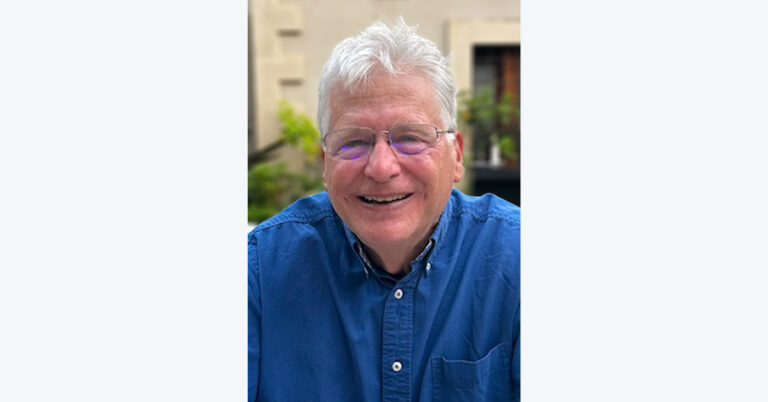
"People continue to learn their whole life," said Jeffrey Rudolph, president and CEO of the
California Science Center and the president of the California Science Center Foundation. "Even
school age children spend more time out of school than in school. Places like science centers
provide positive experiences and opportunities to experience science and become engaged in a
positive way."
The California Science Center, a publicprivate partnership between the State
and the California Science Center Foundation located in Los Angeles, has been actively working for
years to provide the kinds of hands-on experiences recommended by the NRC study, and to form the
productive collaborations with educators that the report recommends.
"Over 1.4 million people
a year experience our exhibits, which include formal educational programs," said Rudolph, a CCST
Council member. "We have a partnership with the Los Angeles Unified School District through which we
conduct a lot of our formal programs. We also work with LAUSD on teacher professional development
programs. It's a multifaceted and very productive partnership."
Rudolph acknowledges the
challenge noted in the NRC study of measuring outcomes from informal science centers, and welcomes
the validation of the center's role in science education. "It's hard to measure how engaged a
student is. We're not only providing understanding of specific areas of science and experimentation,
but enhancing students' attitudes about science. It's a hard thing to measure, but important to
do."
The release of "Learning Science in Informal Environments: People, Places and Pursuits"
is a welcome resource for educators, according to Rudolph.
"I think the concept that this
report embraces, which is to look at education and learning in a broader sense - particularly in
science - may help remind policymakers that it takes a wide range of learning opportunities to
create the workforce that we need in the future. The best learning isn't always happening in
schools."