Calit2 Director Sees Healthcare on Cusp of Breakthrough
 |
"Thanks to an astounding convergent spiral of nanotechnology, information technology, and
biomedical technology each reinforcing the other, we are now in a position to quantify the self as
never before." - Calit2 Director Larry Smarr |
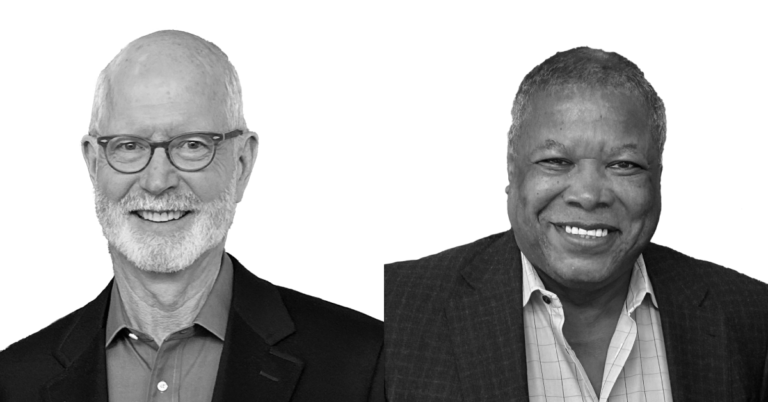
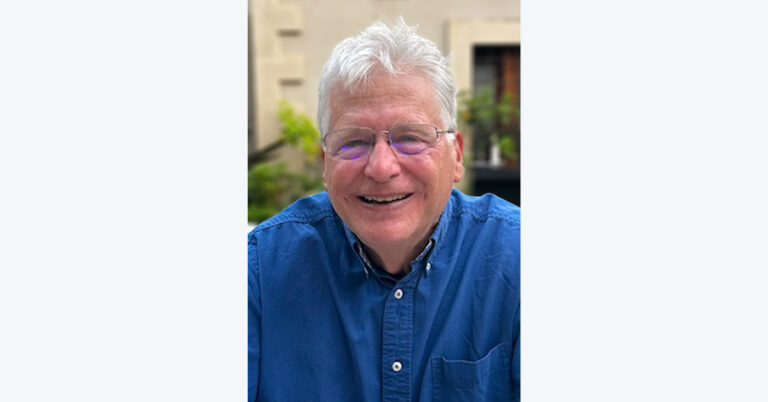
Physicist and supercomputer expert Larry Smarr is known for big, forward-thinking ideas about the
future needs of scientific research. The initiator of an unsolicited National Science Foundation
proposal that led to the creation of five supercomputer centers and onetime director of the National
Computational Science Alliance, Smarr has been directing the inter-institutional California
Institute for Telecommunications and Information Technology (Calit2) since its inception in 2000. As
part of the work of Calit2, he was Principal Investigator on the NSF OptIPuter LambdaGrid project,
which aims to develop planetary scale distributed computing, one of the largest National Science
Foundation computer science research grants in the last decade.
Lately, however, he has been making headlines for a different, more intimate technological
vision: the transformation of his own healthcare.
"Thanks to an astounding convergent spiral of nanotechnology, information technology, and
biomedical technology each reinforcing the other, we are now in a position to quantify the self as
never before," said Smarr. "Calit2 has had a vision of the digital transformation of health for a
decade, and we are now seeing that vision come to fruition."
Smarr has been tracking, and sharing data on, the state of his own health for ten years. He uses
a variety of devices to track vital statistics - ranging from a Fitbit to count his every step, a
Zeo to track his sleep patterns, and a Polar WearLink that lets him regulate his maximum heart rate
during exercise. He has also had his DNA analyzed for disease susceptibility and employs a service
to regularly analyze blood and stool samples. As a result, he has a wealth of longitudinal data on
key biomarkers - data that helped him correctly diagnose the emergence of a chronic disease.
"In just ten years, I have gone from one data point - my weight on the scale - to a billion data
points - my full genome - defining me," said Smarr. "It's a scope and scale of information far
beyond what could have been envisioned even a few years ago."
Smarr contends that digitally enabled genomic medicine is poised to transform medical care in an
unprecedented way.
"The feasibility of this approach has advanced at a staggering rate," said Smarr. "In the last
decade the cost of the genomic analysis of a human DNA has come down from billions of dollars to
thousands. It's a rate of change that has never happened before in human history. We are on the cusp
of transforming the relationship between doctor and patient, enhancing it to an unprecedented
degree."
The transformation, however, is not just about collecting data in novel ways, but being able to
analyze it, effectively data mining with the help of sophisticated artificial intelligence
techniques and continuing to advance biomedical and information technologies.
"Our universities are critical to this effort," said Smarr. "California is unique in the world in
having not only the vast array of innovative Silicon Valley companies, but also its unmatched
research university community investing in the necessary data-intensive research and the digital
infrastructure required to support it. UC Davis, for example, has just entered into a partnership
that will change the landscape of genomic sciences in California and the Western states by
establishing a joint facility with BGI, the world's largest genomics sequencing organization."
Just entering its second decade, Calit2 has already made substantial inroads in addressing
large-scale societal issues with its multidisciplinary approach encompassing nanotechnology, life
sciences, information technology, and telecommunications. For Smarr, however, it is still only the
beginning of a transformative era in which vast amounts of data - collected individually, analyzed
longitudinally and across the human population - will shape our future lives.
"For thousands of years, the question you are asked by your doctor has been, 'how do you feel?'"
he said. "It is being replaced by, 'what are your data trends ?'"
CCST Spotlight is a weekly
newsletter focusing on CCST activities and highlighting innovative science
and technology research, applications, and policy issues in California.
The Spotlight editor is Danny DeCillis.
We welcome information and feedback from our readers about science and
technology at work in the private, public, and education
sectors.
To send us questions or comments, contact us at ccst@ccst.us, or (951) 682-8701.